
How to Search Civil Dockets
For a Superior or State Court civil matter, the clerk's official Case Search page is the place to begin. Its Icon endpoint is one route in. The Georgia E-Access directory is another. It points both Putnam courts to PeachCourt and notes that a provider account is required. There is no anonymous party-name, date, or case-number search. So plan on account access rather than a promised search syntax.
If a login wall stops you, call the office of Trevor J. Addison, view the file at the courthouse counter, or mail a focused written request. Georgia electronic-filing rules also require a free courthouse access option during business hours. Give the court name, the exact case number, the document title, your preferred delivery, and contact details. Magistrate and Probate records live with their own custodians.
- Identify Superior, State, Magistrate, or Probate Court.
- Gather the exact caption, filing date, and case number if known.
- Test the clerk's Case Search link, then the E-Access and PeachCourt route.
- Read the header and chronology before seeking a pleading image.
- Call, visit, mail, or request a certified document from the proper clerk when needed.
Putnam Civil Court Routing
No single generic Putnam County docket collects civil claims. Superior Court holds the big cases. Those include divorce, equity, title-to-land, domestic relations, major contract and tort claims, and anything reserved to it by law. State Court takes limited civil work outside Superior Court's exclusive grip. Magistrate Court runs its own civil-claims docket for matters up to $15,000. Treat that dollar figure as a routing clue. It is not advice on where a specific claim must land.
| Civil matter | Putnam County court | Custodian |
|---|---|---|
| Major civil, equity, land title | Superior Court | Trevor J. Addison's office |
| Divorce and domestic relations | Superior Court | Trevor J. Addison's office |
| Limited civil jurisdiction | State Court | Trevor J. Addison's office |
| Claims up to $15,000 | Magistrate Court | Magistrate office |
| Estate or guardianship | Probate Court | Probate office |
Eatonton Municipal Court generally deals with ordinance and traffic cases rather than private civil claims. Picking the right custodian first saves you a false no-result.
What a Civil Docket Shows
A Putnam County civil docket header can list the court, case number, filing date, caption, case type, judge, and current status. Party roles matter too. A plaintiff files a complaint. A petitioner asks the court for an order through a petition. The other side holds a defendant or a respondent. Attorney and service fields show up when they are public.
| Opening papers | Complaint or petition, filing date, summons, and service entries. |
|---|---|
| Party responses | Answer, counterclaim, cross-claim, consent, default, or dismissal entry. |
| Case activity | Motions, hearing notices, discovery orders, mediation, or settlement events if public. |
| Result | Judgment, final order, dismissal, damages, or costs when the index displays them. |
| Document access | Image link, provider gate, certification path, redaction, or seal indicator. |
No official sample spells out the local case-number format or the full record display. Trust only the number the court itself prints or the clerk returns.
PeachCourt Civil Document Gate
PeachCourt is the provider route Georgia E-Access names. It covers Putnam Superior and State courts. Its landing screen offers email and password fields plus registration and password-recovery controls. Keep two products straight here. A case index is not a complete filing image. The existence of a civil case may be visible even when a complaint, motion, or order sits behind an account or a paid document action.
The clerk's local e-file page also names eFileGA and PeachCourt for civil filing. The current statewide e-file chart marks PeachCourt mandatory for both Putnam courts. When the lists seem to differ, that chart controls. Filing a paper electronically is still a separate act from searching the public docket.
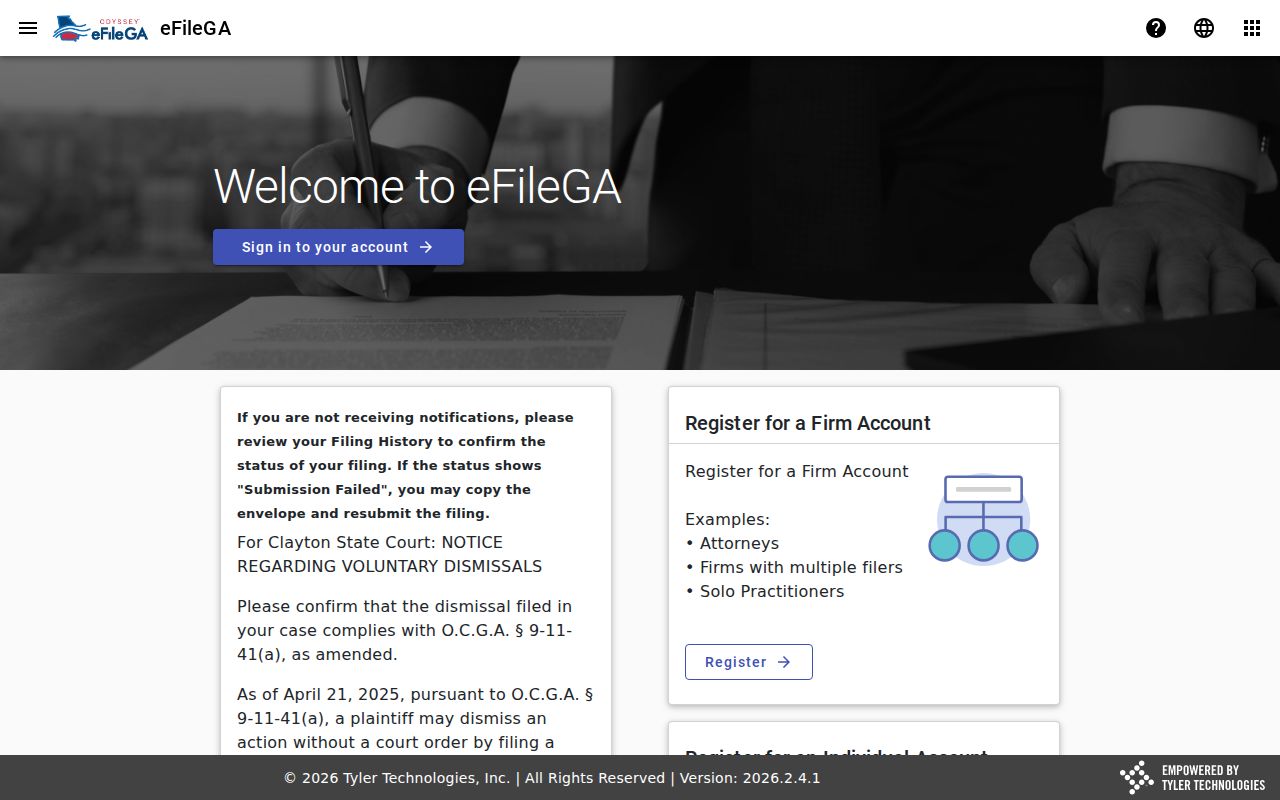
Treat the provider screen as a document gate, not a case-search tool. Its public search fields are not open to view.
Types of Civil Cases on the Docket
Civil cases in Putnam County split across several courts. The court name does the sorting. Superior Court handles the big categories: contract disputes, tort claims, real-property matters, equity, divorce, and other domestic-relations cases. State Court takes civil matters within its county-level limited jurisdiction. Magistrate Court runs its own small-claims channel. Probate covers estates, wills, guardianships, and incapacity. It is not a back door into a Superior Court civil search. The docket entry itself names the court, so read that line first.
- Contract and tort actions in a court with jurisdiction
- Property, land-title, and equity matters in Superior Court
- Divorce and other domestic-relations proceedings in Superior Court
- Limited civil matters in State Court
- Civil claims up to $15,000 in Magistrate Court
- Estate and guardianship proceedings in Probate Court
The caption and the court named on the docket tell you more than the word civil ever will. Check both before you ask the clerk for the file.
Old Putnam Civil Files
The Kofile historical index the clerk links to is built for land records, not lawsuits. Its search fields cover type, year, and parties. They also cover last and first name, plus book, volume, and page. Those controls work well for a historic deed. The same goes for a real-estate index entry. They do not add up to a full archive of old civil litigation. A lawsuit missing there tells you nothing. The Superior, State, Magistrate, or Probate file is a separate question. The Putnam historical index shows the land-index path on the official page.
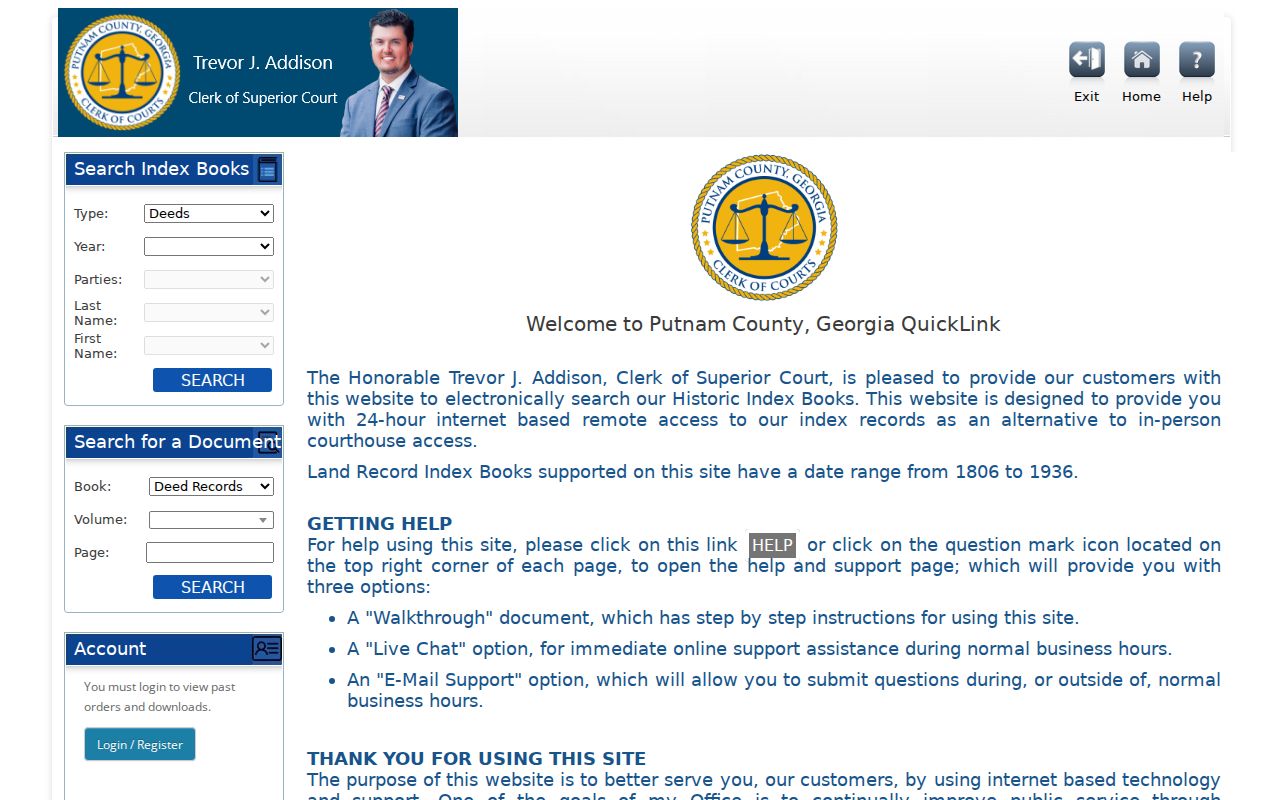
Have an old Putnam County civil file in mind? Ask the clerk about archived pleadings and judgments rather than digging through deed book fields, and get the exact copy route for that file from the office that holds it.
Settings and Hearings on Civil Dockets
What counts as a civil event on a Putnam County docket? Plenty. Motion hearings, calendar calls, and status reviews all show up here. Non-jury settings and trial calendars do too. Specially set matters appear as well. The Master Court Calendar for Putnam uses short codes you can decode. CC means Calendar Call, MD means Motion Day, SC means Status Calendar, NJ means Non-Jury, TC means Trial Calendar, and SS means Special Set. CV simply flags a civil category. Each one marks a scheduled session. None of them is a judgment.
Deadlines can hide too. A scheduling order often sets dates that never reach the public calendar. The docket alone will not tell the whole story. A continuance works the same way. It moves a setting forward but never dismisses the case.
Before you rely on any single date, put three things side by side. Check the newest docket event, any signed order, and the Putnam County court calendar. When they disagree, confirm the date and time with the clerk. The Ocmulgee calendar itself tells readers to do exactly that.
Certified Putnam Civil Judgments
An online index will not pass as an authenticated judgment in Putnam County. To get a certified copy, start with the basics. Pin down the court and the case number. Then name the precise judgment, order, or pleading you need. Trevor J. Addison's office keeps the Superior and State civil files. Georgia's GSCCCA eCertification service offers another route, and it lists Putnam Superior, State, and Juvenile courts as participants through an account-based request workflow.
Separate from lawsuits is the real-estate e-file system. It is a GSCCCA service too. The official page shows instrument recording, though, not civil court-case access, and that difference matters when you ask a clerk for records.
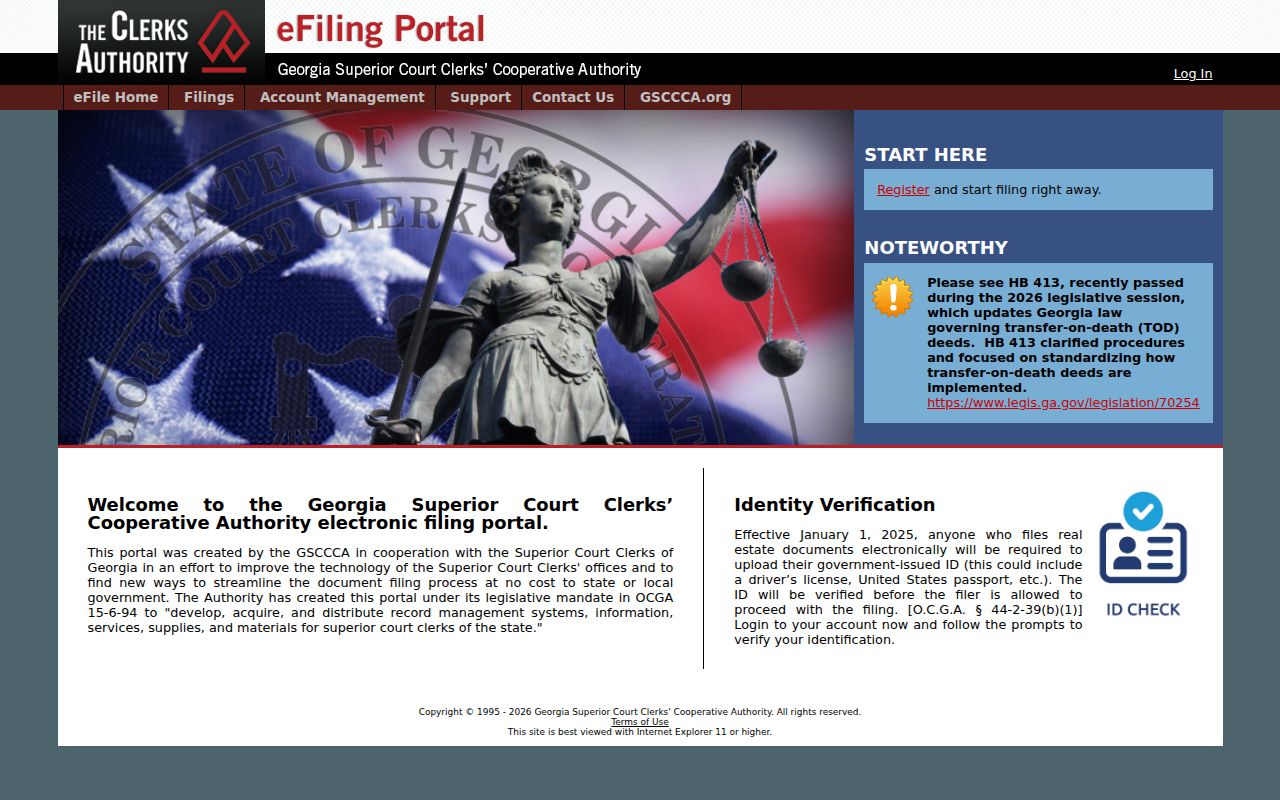
A certified civil judgment belongs with the court-file custodian or its authorized certification route. A land-record submission screen is the wrong tool for that job.
Use the right request path. Putnam County's Board NextRequest system covers administrative records, not Superior or State civil case files.
Public Access to Civil Dockets
Uniform Superior Court Rule 21 begins with open access. Law and court procedure can still set limits, and any restriction must say what is closed and why. Rule 21.6 covers protected identifiers specifically. So a civil index can stay public while an exhibit, an address, a financial number, a domestic filing, or another sensitive piece gets redacted or sealed.
Georgia access rules:
Uniform Superior Court Rule 21 governs public access, limitations, and protected identifiers in Superior Court records.
Georgia Attorney General request guidance supports focused written requests and specific explanations for withheld records.
When a document is withheld, ask which law, rule, or order controls the limit. Ask what public portion remains. Never send needless private data in a request, and never try to slip past a provider gate.
Putnam Civil Index Versus File
The docket and the full case file answer different questions. An index proves a case exists. It names the parties and the court, and it lists events in order. The file is where the real substance sits. It holds pleadings, exhibits, service returns, motions, orders, and the judgment behind those brief entries. A filing title by itself can hide what the document actually says.
| Source | Best use | Limit |
|---|---|---|
| Case Search index | Locate a case and follow event dates | Images and detail may be gated |
| Master Court Calendar | Review scheduled session types | Not a full case history |
| Clerk case file | Inspect filed papers and orders | Some material may be sealed or redacted |
| Certified copy | Obtain an authenticated document | Requires the clerk or authorized workflow |
For Putnam County civil dockets, weigh the latest chronological event against the signed order. That comparison matters whenever the legal result does.